

Iress Xplan
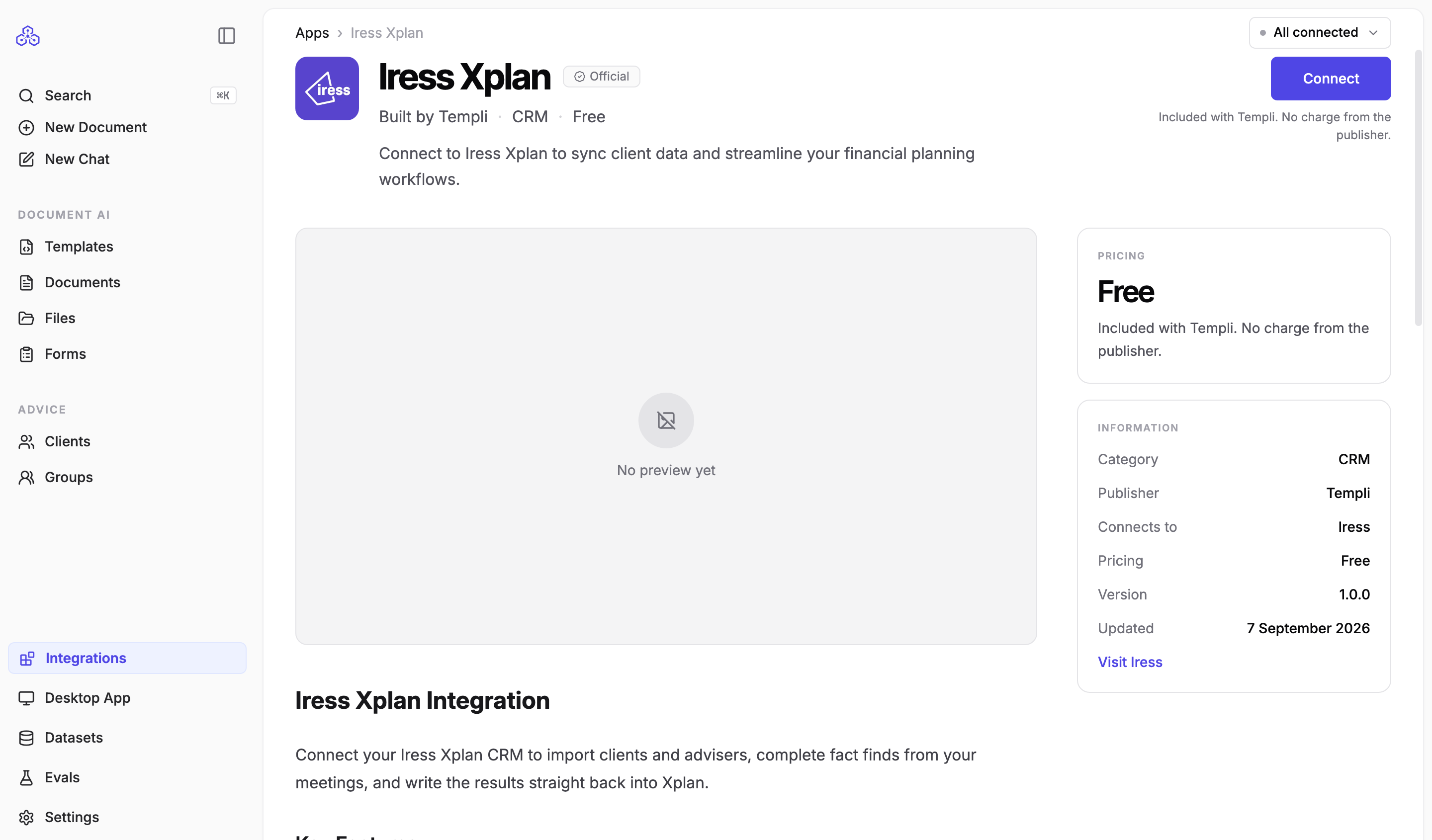
The Iress Xplan app connects Templi to your firm's Xplan site through Iress Open. Once connected, you can import your advisers and clients, have Templi fill the Xplan fact find from meetings and files, and export the completed fact find straight back into Xplan using your own site's option lists.
What it does
Imports your book. Every adviser and client on your Xplan site can be brought into Templi. See Import your clients.
Fills the fact find. Connecting creates an Xplan Fact Find template and makes it your firm's default. It has eleven sections: personal details and health, contact details, addresses, dependants, goals, income, expenditure, assets, liabilities, consents and risk.
Uses your configuration. Titles, income types, asset types, goal types and the rest are read from your site's own option lists, so what goes back matches what your team already uses.
Writes back. Exporting a completed fact find updates the Xplan client, creating the client first if needed.
Answers from Xplan. Ask Templi about a client and it reads their Xplan pensions, holdings and policies directly.
Before you connect
You need your Xplan site address, for example mycompany.xplan.iress.co.uk, and an Xplan site with API access enabled.
We recommend a dedicated Templi service account with access across the whole firm, so the connection reaches every adviser's clients and survives staff changes.
You need an administrator login in Templi. The connection is shared by your whole firm.
Connect
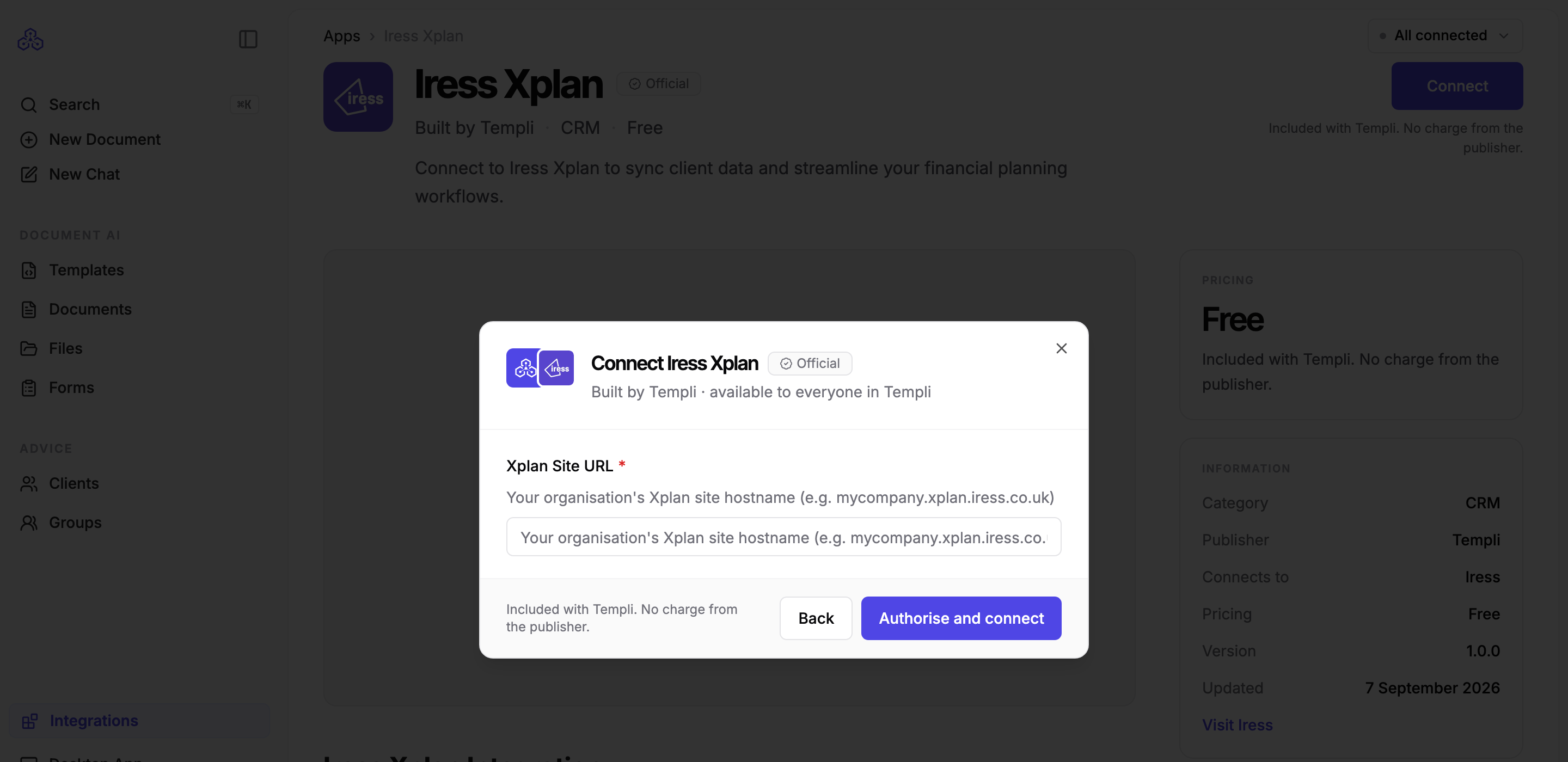
In Templi, click Integrations, open Iress Xplan and click Connect.
Review what the app will be able to do and click Next.
Enter your Xplan site address in Xplan Site URL and click Authorise and connect.
Sign in to Xplan in the tab that opens and approve the connection.
The general steps, and what to do if the app later asks to be reconnected, are in Connect your back-office system.
What is read and what is written back
Fact find area | Imported from Xplan | Exported to Xplan |
|---|---|---|
Personal details and health, contact details, addresses | Yes | Yes |
Dependants, goals | Yes | Yes |
Income, expenditure | Yes | Yes, except items Xplan derives from a plan, which are skipped |
Assets, liabilities | Yes | Yes |
Consents | Yes | Yes |
Risk rating | Yes | Yes |
Employment | No. Held in Templi only | No |
Groups and households | No. Only the partner link between a couple is read | No |
Pensions, annuities, protection, portfolios | Read when answering questions, not imported | No |
Documents | No. Xplan provides no document access | No |
Limits to know about
No groups. Xplan does not provide group or household data, so Templi cannot create groups from an Xplan import. Only the partner relationship comes across. Create other groups in Templi by hand.
Advisers arrive without email addresses. Templi suggests matches by name, and inviting an adviser asks you to type their email.
Employment stays in Templi. Xplan's connection has no employment record, so occupation and employer are held in Templi only. Salary still syncs as income.
Insurance can be created but not updated in Xplan. Client notes are write-only in Xplan and are not read.
A section your site does not expose is skipped during import, with a warning, rather than failing the client.